
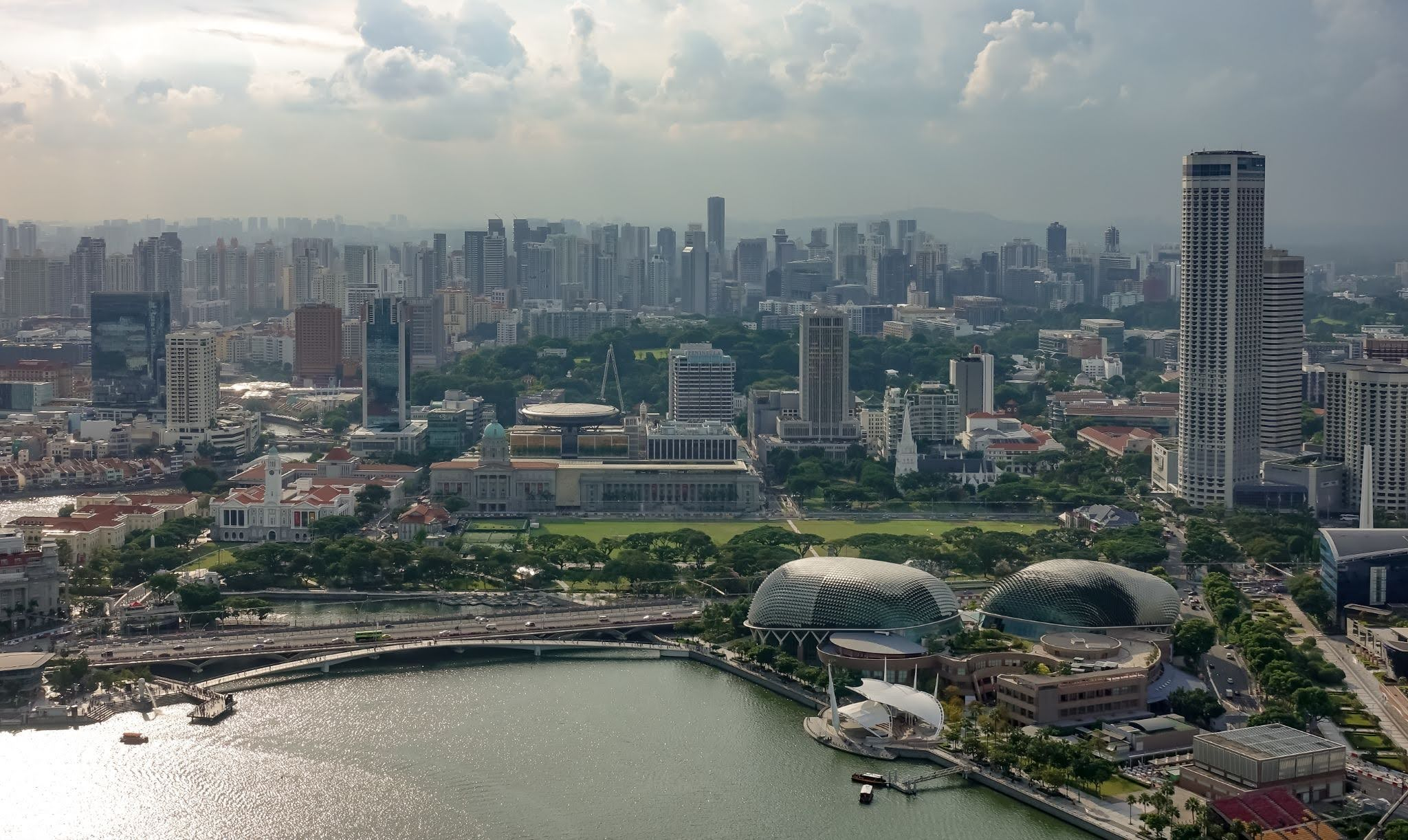
Singapore is home to more than 60 biopharmaceutical manufacturing plants, including facilities run by eight of the world’s 10 largest biopharma companies. These sites produce small-molecule active pharmaceutical ingredients (APIs), biologics, vaccines and newer modalities such as cell therapies and antibody-drug conjugates (ADCs).
Singapore attracted approximately $3.46 billion (S$4.4 billion) in biomedical sciences investment in 2025, according to the Ministry of Trade and Industry. The government expects those investments to support 1,775 jobs over five years.
Let’s take a closer look at some of the recent advanced manufacturing and life sciences R&D moves in Singapore.
1. AstraZeneca Builds ADC Manufacturing Capacity
AstraZeneca is building a $1.5 billion, 58-acre manufacturing facility in Tuas South for ADCs, cancer treatments that link targeted antibodies with cancer-killing drugs.
The site will be AstraZeneca’s first facility to handle the full ADC manufacturing process at commercial scale, including production of the antibody, drug and linker, conjugation and final filling.
The company expects the facility to be operational in 2029 and plans to hire more than 800 people for the site.
2. Sanofi Adds Flexible Vaccine and Biologics Production
Sanofi invested approximately $628 million (S$800 million) in its Modulus facility at Tuas Biomedical Park. Its manufacturing areas can be reconfigured within days for different vaccines and biologic medicines, with capacity for up to four products at the same time. The Singapore site is now producing its first product, an enzyme, according to the International Society for Pharmaceutical Engineering (ISPE). The facility is expected to support around 200 jobs.
3. WuXi Biologics Expands Drug Product Manufacturing
WuXi Biologics completed the structural topping-out of a new drug product facility at its Tuas contract research, development and manufacturing organization (CRDMO) hub in June 2026.
Once operations begin in 2027, the facility is expected to produce roughly 100 million prefilled syringes and vials annually.
The 13.5-hectare Tuas hub as a whole is also expanding to support up to 120,000 liters of biologics drug substance manufacturing capacity. At the same Tuas site, WuXi XDC is expanding its bioconjugate and ADC manufacturing operations. In August 2026, a new dual-function manufacturing line at the Tuas site completed GMP qualification. The facility will produce antibody intermediates and bioconjugate drug substances.
4. AbbVie Adds Biologics Capacity
AbbVie’s $223 million expansion of its Tuas Biomedical Park manufacturing site is expected to begin operations in 2026.
The project adds 24,000 liters of biologics drug substance capacity and more than 100 jobs. AbbVie says the additional capacity will support existing medicines as well as compounds in development across immunology and oncology.
5. Singapore Science Park Adds Life Sciences R&D Space
CapitaLand’s Geneo development at Singapore Science Park opened in May 2026, backed by approximately $1.1 billion (S$1.4 billion) in investment.
Geneo provides roughly 80,000 square meters for biomedical R&D, wet labs and coworking laboratory space. Organizations based there include Singapore’s Agency for Science, Technology and Research (A*STAR), Chugai Pharmabody Research and biotech incubator NSG Bio.
Under the RIE2030 plan released on August 31, 2026, Singapore will invest about $29 billion (S$37 billion) in research, innovation and enterprise through March 2031.
The plan includes additional funding for Startup SG Equity and a new Research Translation Grant for early-stage public-sector technologies.

Comments
Add a comment