
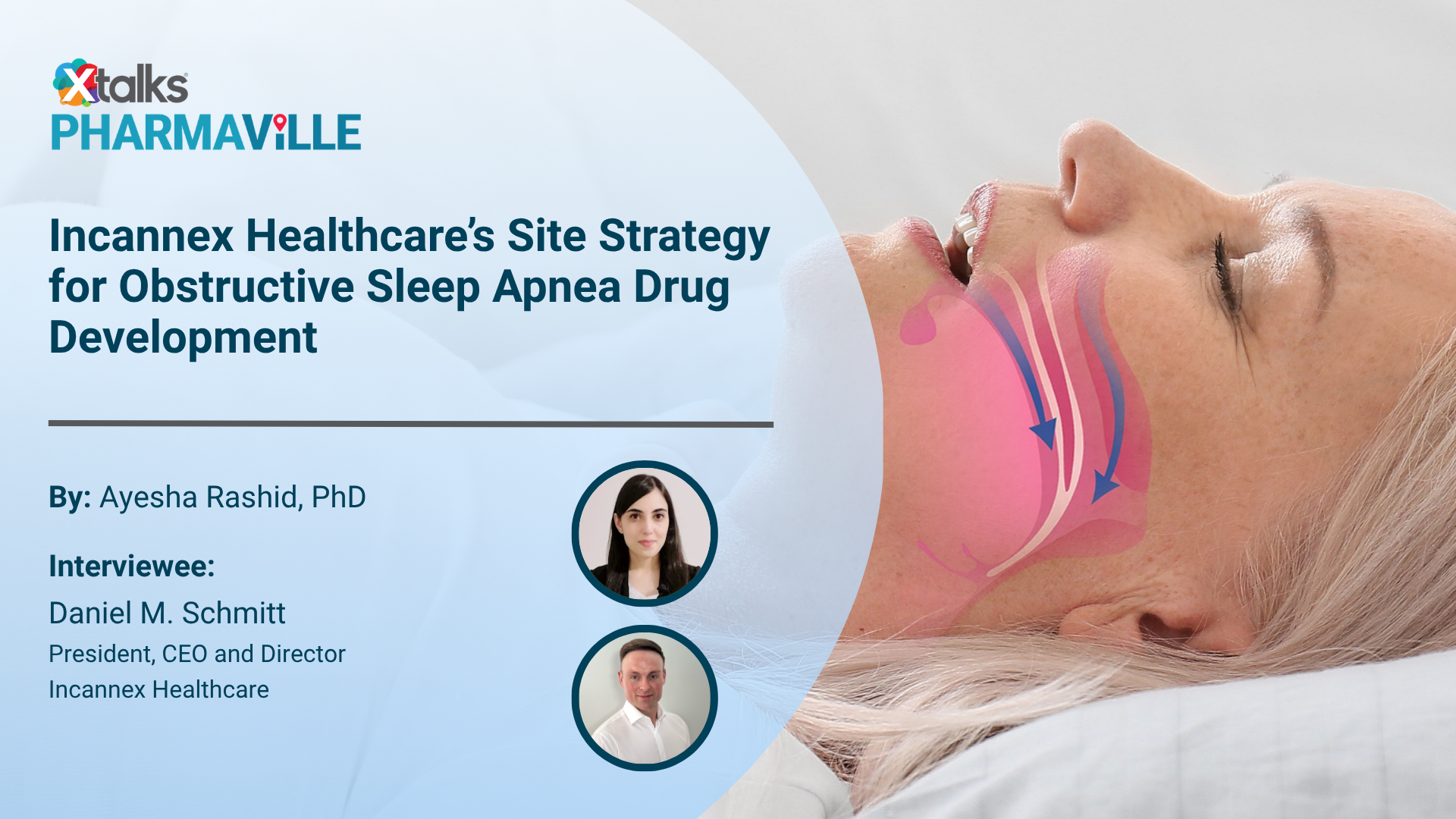
Obstructive sleep apnea (OSA) is one of the most common sleep-related breathing disorders globally, yet it remains underdiagnosed and difficult to manage for many patients.
An analysis published in The Lancet Respiratory Medicine estimated that about 936 million adults aged 30 to 69 worldwide have mild to severe OSA, including about 425 million with moderate to severe disease.
Despite a few recent advances in the space, including the FDA approval of Eli Lilly’s Zepbound (tirzepatide) for moderate to severe OSA in adults with obesity — the first drug treatment option in the indication — positive airway pressure (PAP) therapy, including CPAP machines, remains a core standard of care. However, challenges around PAP adherence, tolerability and patient preference continue to shape the need for additional treatment options.
For Incannex Healthcare, that unmet need is central to the company’s lead program, IHL-42X. The biopharmaceutical company is advancing a pipeline of combination drug candidates across OSA, generalized anxiety disorder and rheumatoid arthritis, with IHL-42X representing its most advanced and strategically important asset.
In an interview with Xtalks, Joel Latham, President and CEO of Incannex Healthcare, discussed the company’s pipeline, its clinical development strategy for IHL-42X and the operational factors that are shaping its approach to clinical trial site selection.
Building a Pipeline Around Combination Medicines
Incannex’s development strategy is focused on novel combination products for indications with limited or inadequate treatment options. Latham said the company’s pipeline currently centers on three lead assets: IHL-42X for OSA, PSX-001 for generalized anxiety disorder and IHL-675A for rheumatoid arthritis.
IHL-42X is an oral fixed-dose combination of dronabinol and acetazolamide designed to target physiological pathways associated with intermittent hypoxia and hypercapnia in OSA. According to Incannex, the combination is intended to act synergistically, with dronabinol targeting cannabinoid receptors involved in airway dilation and acetazolamide inducing modest metabolic acidosis to increase respiration.
The company’s broader pipeline reflects a similar combination-based approach. IHL-675A combines cannabidiol and hydroxychloroquine sulfate for rheumatoid arthritis, while PSX-001 is an oral synthetic psilocybin candidate being developed with psychotherapy for generalized anxiety disorder.
While Latham emphasized that Incannex has a diversified portfolio, he said the company’s near-term focus is on the assets with the most advanced clinical data, particularly IHL-42X and PSX-001.
IHL-42X has become Incannex’s lead program following positive Phase II data. In August 2025, the company reported positive results from the RePOSA Phase II trial, which showed statistically and clinically significant improvements across multiple endpoints, including reductions in apnea-hypopnea index (AHI), oxygen desaturation index, patient-reported sleep impairment and fatigue measures. The RePOSA program is evaluating IHL-42X in people with OSA who are non-compliant, intolerant or naïve to PAP devices, including CPAP.
As a potential oral therapy for a condition that has historically relied heavily on devices, behavioral interventions and, only recently, pharmacologic treatment in specific patient groups, IHL-42X is positioned to address a significant unmet medical need and market gap.
Following the Phase II results, IHL-42X received FDA Fast Track designation, which Latham said, “really does underpin the excitement behind IHL-42X.”
De-Risking Early
A major theme in Incannex’s current strategy is de-risking IHL-42X before entering a streamlined Phase III program. Rather than moving directly into Phase III based on Phase II results alone, the company has added a Phase II crossover dose-optimization study, known as DReAMzz, to refine dosing and strengthen the late-stage development package.
“For us, the focus is on continuing to de-risk our assets, progressing them at a rapid pace through the clinic and being able to provide key catalysts and milestones to the market,” Latham explained.
Latham said the dose-optimization study is designed to help determine whether different dosing approaches may be better suited to different subsets of patients. That could be important in a heterogeneous condition like OSA, where severity, underlying physiology, comorbidities and patient experience can vary widely.
“There’s potentially not a one-size-fits-all approach with IHL-42X,” Latham said. “We may have specific dosing that fits specific subsets of patients.”
In May 2026, Incannex announced that DReAMzz had officially commenced. The company said all 14 clinical trial sites had been identified, manufacturing of IHL-42X drug product had been completed, import and export permits had been secured and a global distribution partner had been onboarded. The study is intended to evaluate dose optimization, objective sleep metrics and patient-reported outcomes ahead of the planned Phase III program.
Why Clinical Trial Site Selection Matters in OSA
For Incannex, the move toward late-stage development also means clinical trial operations are becoming increasingly important. OSA studies require specialized capabilities, including sleep medicine expertise, overnight sleep testing infrastructure, experienced investigators and strong patient engagement processes.
Latham said Incannex considers three major factors when selecting clinical trial sites for IHL-42X: experience in sleep medicine, strong patient recruitment capabilities and proven operational performance.
“Sites must have experience in sleep medicine,” Latham said. “It is pivotal that we’re working with sites that understand what we’re talking about and are well versed in the indications that we’re working with them on.”
Experienced investigators who have conducted sleep trials are also “a key factor,” according to Latham. “We’ve been able to leverage our clinical advisory board, who are leaders in the obstructive sleep apnea space, particularly within the US. So the breadth of reach that we’re able to obtain through our clinical advisory board and being able to work with experienced investigators has been of the utmost importance for us,” he explained.
Recruitment is particularly important in large indications like OSA, where prevalence is high, but trial participation may still be limited by diagnosis rates, patient willingness, sleep-study burden and competing treatment options. Latham said patient recruitment can become a bottleneck for many companies, making site selection a central part of clinical development strategy.
For Incannex, that has also meant prioritizing patient engagement and retention. Latham emphasized that sites must not only enroll patients efficiently but also keep them engaged throughout the study to reduce dropout and support trial quality.
“It’s one thing to be able to recruit patients at a rapid pace, but we need to ensure patients are quite engaged and that the sites are retaining them over time because that flows into the success of our trials,” he said.
Using Technology to Strengthen Trial Execution
As Incannex prepares for larger and more complex studies, the company is also applying lessons from earlier-stage trials. Latham said the company has encountered challenges around recruitment, retention and protocol efficiency in past studies, and has adjusted its approach accordingly.
One area of focus is the use of technology to improve recruitment. Latham said Incannex has incorporated AI and other data tools into its recruitment structure to identify and enroll appropriate patients more effectively.
The company is also focusing on site training and protocol adherence. Based on lessons learned from previous experiences, Latham explained that the company now “ensures that it provides rigorous training to trial sites and that protocol efficiency is adhered to throughout development or throughout the completion of clinical trials, which is of the utmost importance, particularly with adhering to regulatory standards.”
For later-stage programs, operational consistency becomes especially important because global trial execution can introduce variability across sites, regions, regulators and data systems.
Latham said Incannex is addressing these risks through careful planning, early regulatory engagement and partnerships with experienced CROs, investigators and clinical trial sites.
Preparing for a More Competitive OSA Treatment Landscape
The OSA market is becoming more dynamic as pharmaceutical approaches begin to complement established device-based therapies. For OSA patients who struggle with existing therapies, that evolution could open the door to more personalized and accessible treatment strategies.
For Incannex, the next stage of development will depend on whether its dose-optimization work can produce a stronger, more targeted Phase III strategy.
With growing emphasis on site selection, patient retention, operational planning and regulatory engagement, late-stage success increasingly depends on careful groundwork laid well before Phase III begins.
Ultimately, advancing new therapies through late-stage development requires the operational discipline to translate that promise into successful, patient-centered trials.

Comments
Add a comment